How AI Prosumer Tools Are Marketing on TikTok in 2026

Over the past seven days, AI prosumer marketing shifted from selling “AI” to dramatizing finished work: the app built, document synthesized, website sold, or promotion won. Superhuman led with workplace comedy, Lovable and Replit sold economic agency, while quieter brands largely relied on organic expert commentary rather than active social campaigns.
The state of AI prosumer marketing this week
The clearest divide was not TikTok versus Instagram. It was creator-native storytelling versus product-native storytelling.
TikTok’s stronger promotions borrowed an established creator format—corporate satire, a stitched reaction, a topical explainer, developer comedy—and inserted the tool after the audience was already invested. Instagram’s active brand accounts generally led with polished product storytelling, finished projects, and fast interface demonstrations.
The market is also separating into two positioning camps:
1. AI as leverage: build a business, ship an app, win a promotion, or operate a team.
2. AI as invisible infrastructure: connect context, coordinate agents, synthesize documents, and keep work moving across existing tools.
Generic “work faster with AI” messaging was rarely the center of the strongest creative.
What each brand is selling
Superhuman: career leverage, not faster email
Superhuman had the clearest creator-led campaign in the sample. Its positioning has expanded from inbox speed into a broader promise: look exceptionally capable at work without drowning in coordination and documentation.
Its standout TikTok partnership placed Superhuman Go and Docs inside @corporatenatalie’s established “what I say versus what I mean” corporate-comedy format. The product appears only after the performance-review joke is working: Superhuman gathers information, prepares documents, and drafts reports while the character turns the output into promotion-worthy corporate language.

Audience reactions concentrated on the comedy and corporate language rather than praising a feature list. That is a strength: viewers repeated the opening threat and discussed phrases they could use in evaluations. Superhuman entered an existing conversation instead of asking viewers to care about software first.
On Instagram, the brand used two complementary creator lanes:
- An ex-Meta engineer running an AI-automation agency framed Superhuman as the layer replacing scattered notes, threads, and status updates with one coordinated priorities document.
- An office sketch mocked the coworker who creates an agenda document, summary document, and primary document for every meeting; Superhuman then synthesized the documentation.


Positioning takeaway: Superhuman is not primarily selling “write an email faster.” It is selling fewer coordination chores, stronger workplace performance, and the appearance of being unusually organized.
Lovable: from idea-to-app toward idea-to-income
Lovable showed the widest positioning range. Its official Instagram content moved beyond “build an app without code” into three more valuable outcomes:
- Build AI-native software, not another chatbot.
- Turn business data into growth campaigns.
- Package creative work so it can be discovered and sold.
One official reel demonstrated voice apps, research dashboards, contract review, staff scheduling, property operations, and ad generation. The rapid succession of working interfaces made “your app can do more” tangible.
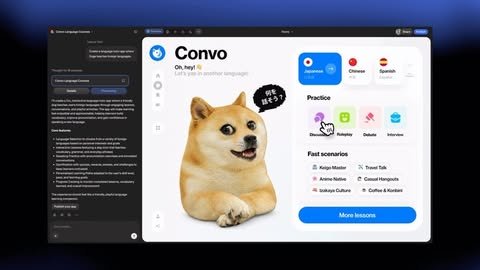
Another positioned Lovable as a growth operating system: it built an analytics dashboard for a food truck, found a weak sales day, connected advertising platforms, and generated an Instagram campaign. The message was no longer “make a website”; it was build, understand, and grow a business in one environment.

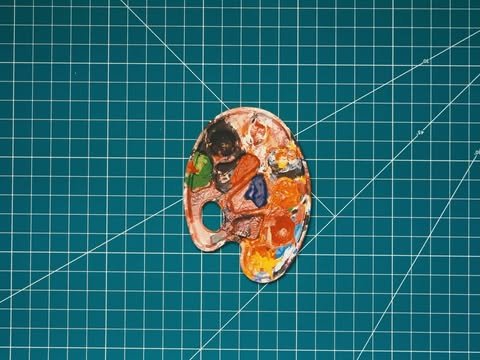
The newest official reel used Van Gogh’s commercial obscurity as the opening story, then argued that modern artists can control discovery by building interactive portfolios. It showed swipeable galleries, editorial sites, 3D experiences, and scratch-to-reveal artwork.
On TikTok, Lovable’s partner ecosystem was much more direct-response oriented. @melodii744 stitched a video about high-paying student jobs, rejected that path with “No, don’t do that. Do this instead,” and demonstrated finding a local business, generating its website, and offering to sell it. The content made Lovable a vehicle for earning, not merely creating.

That post earned reach, but its sampled comments challenged the income claim. This is an important warning: aspirational earnings hooks can distribute well while weakening trust. Lovable’s official artist and small-business stories were more credible because they demonstrated the artifact without promising easy money.
Positioning takeaway: Lovable is stretching from an AI builder into an entrepreneurship platform. The strongest version is “turn an idea into a working, distributable business asset,” not “type a prompt and get a website.”
Replit: make the idea culturally relevant before demonstrating it
Replit’s best creator partnership used Halloween as the reason to build. @moddy.a.m opened with the observation that not every home participates in Halloween, then created “Treat Trail”: a neighborhood map showing candy stops and decorated-house rankings.

The sequence was especially clean:
1. Timely cultural observation.
2. Specific community problem.
3. Plain-English prompt.
4. Working map, registration flow, and leaderboard.
5. Direct invitation to build an idea with Replit.
This is stronger than a generic “I built an app in minutes” claim because the viewer can immediately understand who would use the result and why it matters.
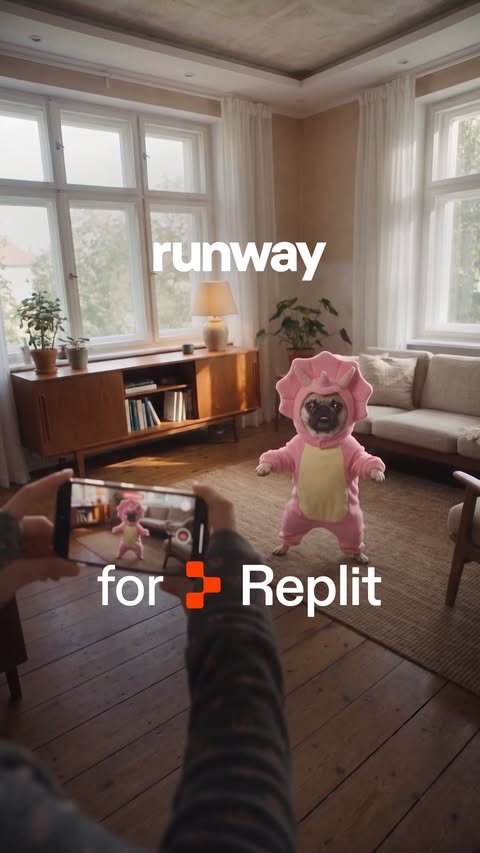
Replit’s official Instagram content emphasized finished creative quality, not merely code generation. Its Runway integration opened with a pug in a dinosaur costume entering a prehistoric world, then showed casual pet photos becoming polished e-commerce assets inside a finished storefront.
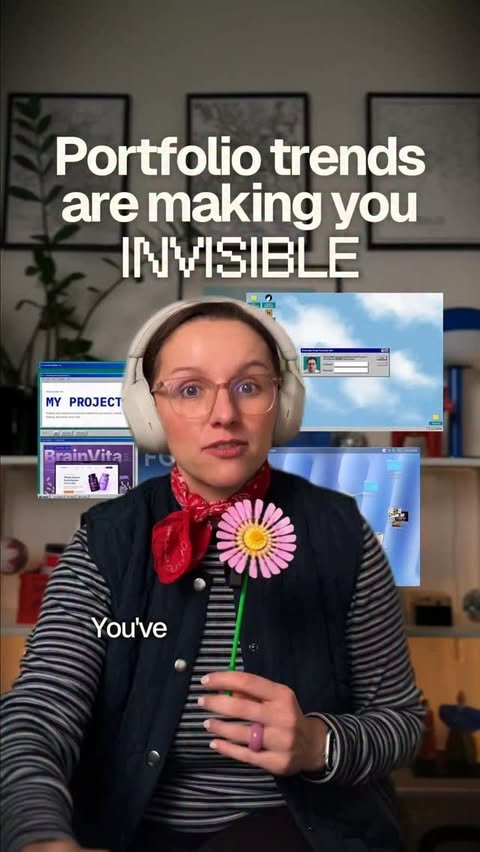
A separate creator-led reel warned that trend-following portfolios make designers invisible. It then showed a customized retro portfolio built through Figma, 3D assets, animations, and Replit.
Positioning takeaway: Replit is presenting itself as the place where culturally timely ideas become complete, visually credible products. “Idea to useful artifact” is doing more work than “AI coding.”
Notion: the neutral AI hub for a business
Notion’s most relevant TikTok signal was organic rather than an obvious campaign. A small-business operator argued that Notion can become a neutral AI hub connecting company knowledge, CRM data, tasks, custom skills, and multiple models without locking the business into one provider.

The creator explicitly said it was not an ad. That makes the post strategically important: it shows how advanced users are repositioning Notion on the brand’s behalf. The value is no longer just flexible pages or an AI writing assistant; it is a control plane for company context.
Notion’s official Instagram account did not surface a qualifying new reel in the hydrated recent feed during the seven-day window. Its profile language—“the AI workspace that works while you sleep”—supports the autonomous-work positioning, but this week’s meaningful social proof came from third-party explanation rather than fresh official creative.
Positioning takeaway: Notion owns a credible “AI hub” territory, but the proposition currently requires expert explanation. A concrete recurring workflow would make it easier for mainstream viewers to grasp.
Cursor and Claude Code: the ecosystem creates the marketing
Cursor did not show current official Instagram publishing in the observed seven-day feed. The newest official reel available was several months old, so it should not be treated as current campaign evidence.
The live conversation around Cursor and Claude Code was nevertheless active. It came from developers teaching, critiquing, and joking about agent behavior:
- A technical explainer warned that AI-generated apps leave developers unable to understand their own architecture, then demonstrated an open-source visualization tool compatible with Cursor and other coding agents.
- A creator presented five MCP integrations as essential extensions that turn Claude into a connected research, browser, scraping, and motion-design system.
- Morphy repeatedly anthropomorphized Claude as a small animated agent that misunderstands instructions, exceeds its brief, or hits usage limits.
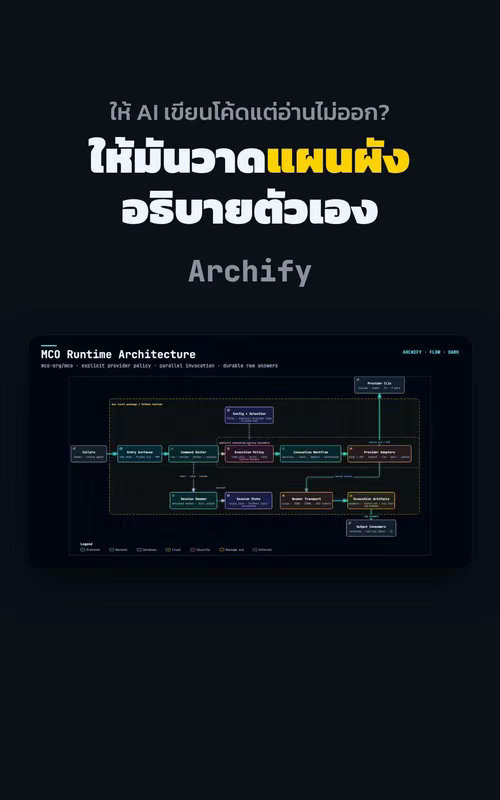


This reveals a major shift in coding-tool positioning. The aspiration is no longer simply “write code faster.” It is supervise agents, connect them to tools, and manage their autonomy without losing control.
Gamma: presentation software hidden inside workplace drama
Gamma’s visible TikTok partner strategy was unusual. Its ambassadors often led with office grievances, roommate drama, or revenge stories and mentioned Gamma as the instrument used to create the decisive presentation.
One reel opened with a coworker being called cheap after contributing to an office birthday gift despite being denied raises. The story escalated into an “office generosity” Gamma deck comparing employee contributions with executive bonuses. There was no interface demonstration and no CTA; Gamma functioned as a plot device.

This format generated more reach than straightforward product instruction on the same creator’s feed, but its engagement quality was moderate. It is an awareness play: memorable story first, weak product comprehension second.
Gamma’s newest official Instagram launch film fell just outside the strict seven-day window, so it is not part of the core weekly findings. It still provides useful context for the current campaign: cinematic mockumentary production, company leaders on camera, and Gamma positioned as a “storytelling agent” capable of turning messy inputs into polished presentations.
Granola, Linear, Raycast, Arc, Wispr Flow, and Perplexity: limited verified weekly activity
These brands appeared in search results, but most results were ambiguous, irrelevant, older than the window, or organic mentions rather than a clear current campaign.
- Granola: Search was heavily polluted by lifestyle uses of “granola.” A high-reach meeting-notes result actually demonstrated Microsoft OneNote, not Granola. No strong verified Granola campaign emerged.
- Linear: Searches frequently returned the ordinary word “linear,” fitness apps, or unrelated project-management content. No clear brand-led creative pattern was verified.
- Raycast: The official Instagram account’s most recent surfaced reel was older than the window. Current TikTok discovery was mainly generic Mac-app content, not a visible Raycast push.
- Arc: Current results were sparse and often not about the browser. No coherent weekly campaign was visible.
- Wispr Flow: There were scattered voice-typing and dictation results, but no sufficiently strong, verified current creator program surfaced in the reviewed recent posts.
- Perplexity: The official hydrated Instagram feed did not return a qualifying post within the seven-day slice. Recent TikTok discovery skewed toward Claude workflows and MCPs rather than a distinct Comet campaign.
The absence of a verified pattern is itself useful. In a week where Superhuman, Lovable, and Replit produced multiple comprehensible narratives, these brands were less culturally legible in short-form discovery.
The hook formats working now
1. Native entertainment format first, product second
The strongest example was Superhuman’s corporate-language sketch. It could work as entertainment without the integration, which prevented it from feeling like a conventional software advertisement.
Strongest branded format
Corporate ritual → escalating joke → product as the hidden advantage.
The important nuance is not simply “use humor.” The humor has to come from a ritual the product’s audience already recognizes: performance reviews, pointless documentation, rate limits, or an agent misunderstanding a prompt.
2. Contrarian interruption
“No, don’t do that. Do this instead” belongs to a broad, high-performing hook family. It works by hijacking an existing aspiration and supplying a more surprising path.
Lovable’s partner used it against the idea of getting a high-paying student job. The weakness was not the hook; it was the unsupported certainty of the income outcome.
High reach, trust risk
Reject the expected path, then prove the alternative before making an earnings claim.
3. Timely problem-to-build
Replit’s Halloween app converted a seasonal observation into a product brief. This made the demonstration feel like participation in current culture rather than a reusable software tutorial.
Transferable pattern
Current event → overlooked problem → prompt → useful finished app.
The exact Halloween wording was not independently exceptional across the wider hook cohort. The stronger transferable element was the timely utility build, not the holiday phrase itself.
4. Aggressive expert gatekeeping
“If you’re not using these five Claude MCPs, then just stop using AI” is a strong example. It combines status, fear of missing out, a numbered structure, and immediate visual proof.
This format suits products with extensibility or ecosystems. It is less suitable for a simple consumer app where the promised depth cannot be demonstrated.
5. Relatable product failure as entertainment
Morphy’s recurring skits turn Claude’s quirks into a character: overeager, literal, expensive, autonomous, and occasionally brilliant. Across the broader culture sample, developer comedy about agents misunderstanding instructions was one of the stronger breakout content families.
Emerging winner
Give the AI a personality and dramatize a real failure users already complain about.
The product appears in the environment rather than interrupting the joke. That is why the series feels like developer culture rather than a demo channel.
6. Save-worthy utility lists
The Mac-app countdown remains dependable when every item receives a fast, visible demonstration. @mike.banh opened with a specific ownership moment—getting a new MacBook—and showed three free tools rather than discussing abstract productivity.

This hook family was not the week’s highest-breakout AI format, but it is repeatable, legible, and well matched to Raycast, Arc, or other tools trying to reach a broader Mac audience.
7. Anthropomorphic software competition
A newer creative lane portrays software brands as characters with personalities and rivalries. One recent post presented an aging ChatGPT losing users to specialized AI characters, each visually embodying a different job.

Across the wider recent cohort, animated software competition showed stronger-than-baseline breakout characteristics. The format translates an increasingly complex tool landscape into a story viewers can understand instantly.
What creator partnerships look like now
The week’s effective partnerships were not broad lifestyle placements. Brands selected creators whose existing format could absorb the product:
Corporate comedians
Superhuman used workplace rituals and promotion-season tension.
AI-business educators
Replit used a timely app build with a complete outcome.
Side-hustle creators
Lovable used local-business prospecting and website sales.
Technical educators
Claude and Notion benefited from MCP, architecture, and infrastructure explanations.
Recurring fictional creators
Morphy turned coding agents into characters inside an ongoing universe.
The strategic shift is from borrowing a creator’s audience to borrowing a creator’s narrative grammar. @corporatenatalie did not become a software reviewer; Superhuman became part of her corporate sketch. @moddy.a.m did not enumerate Replit features; he used Replit to complete a culturally timely build.
Five new trends shaping AI prosumer marketing
1. “AI” is becoming backstage infrastructure
The best content increasingly leads with a promotion, business, portfolio, campaign, or community utility. Model names and technical capabilities appear later as proof.
2. Builders are becoming business operating systems
Lovable and Replit are moving downstream from generation into distribution, advertising, visual asset creation, and monetization. The competitive story is shifting from “what can you build?” to “can this tool help the thing you built succeed?”
3. Agent supervision is replacing coding-speed rhetoric
Power users are talking about orchestration, context, MCPs, background work, usage limits, architecture visibility, and agent mistakes. Coding brands need to demonstrate control and inspectability, not just autonomy.
4. Product flaws are becoming brand characters
Rate limits, excessive agent initiative, literal interpretation, and sloppy generated output are no longer avoided. They are material for comedy. This makes the marketing more credible because it reflects real user experience.
5. Awareness and comprehension are separating
Gamma’s drama posts can generate attention with almost no product UI. Superhuman’s sketches combine awareness with some workflow proof. Lovable and Replit’s official reels maximize comprehension through finished artifacts. Brands should decide which job each post performs rather than expecting every reel to do everything.
What marketers should take from this week
Start with a social tension, not a software category. Performance reviews, weak portfolios, seasonal participation, local businesses without websites, and developers losing control of agents all created stronger entry points than “meet our AI assistant.”
Show the finished artifact early enough to validate the claim. A generated app, synthesized document, working storefront, campaign preview, or interactive portfolio is more persuasive than an animated prompt box.
Match the creator by repeatable format. Corporate comedy fits workplace suites; build-in-public and side-hustle creators fit app builders; technical explainers fit infrastructure products. Follower count is secondary to whether the product can inhabit the creator’s normal storytelling.
Do not confuse reach with trust. Lovable’s aggressive earnings story traveled, but the sampled reaction was skeptical. Superhuman’s corporate comedy created a healthier response because viewers engaged with the joke and tagged relevant colleagues.
Treat quiet brand weeks honestly. Granola, Linear, Raycast, Arc, Wispr Flow, and Perplexity may be active elsewhere or through posts that were not discoverable, but no strong seven-day short-form pattern was verified here. That is not evidence that they have no marketing; it means they were not winning visible cultural territory in this review.
Bottom line
This week’s winners made AI software feel less like software. Superhuman turned it into a workplace advantage, Lovable into economic and creative agency, Replit into a culturally relevant building engine, and the coding ecosystem into a cast of fallible agents. The strongest emerging formula is simple: recognizable tension, concrete artifact, native creator format, and minimal AI abstraction.


