What Before/After UGC Videos Are Working on TikTok in 2026

Over the past seven days, the strongest before/after UGC did not rely on elaborate morphs. It used obvious proof: a raw problem shot, a beat-synced hard cut or lens-cover reveal, consistent framing, and enough post-reveal time to inspect the result. Short beauty clips favored speed; home, cleaning, and salon stories earned attention through process and payoff.
What’s Working in Before/After UGC Right Now
This review covers transformation content published from October 10–17, 2026, across TikTok and Instagram. The clearest pattern is that proof matters more than editing complexity. Strong posts make the starting condition unmistakable, keep the comparison visually legible, and give the finished result room to breathe.
TikTok currently rewards two distinct approaches: ultra-short beauty reveals and longer, story-led transformations. Instagram supports those formats too, but the strongest recent Reels more often package the transformation as a tutorial, branded demonstration, or extended client story.
The chart is representative, not a claim that length alone determines performance. Topic, creator history, story, product, audio, and distribution all remain confounders.
The Transition Hierarchy
1. Hard cuts are the default—and often the best choice
A plain hard cut works when the contrast itself supplies the spectacle. The strongest short beauty examples cut on a clear musical accent, keep the face large in frame, and move to the result within the first few seconds.
A nine-second makeup transformation switches looks on a crunch-and-beat cue after four seconds. The new look then occupies the majority of the video, giving viewers enough time to compare the makeup styles.

Another makeup post uses only the labels “before makeup” and “after makeup.” It cuts at four seconds, then spends seven seconds on expressions, posing, and a wink. The edit is technically simple, but the after is not treated like a single freeze-frame.

Best use: makeup, fitness, complexion, teeth, hair color, or any result that reads immediately without needing process footage.
Execution rule: place the cut on the largest audible beat, vocal change, or sound effect—not midway through a musical phrase.
2. Lens-cover transitions work when they preserve continuity
A hand-to-lens transition hides the edit without obscuring the basic before/after logic. Its value is not “smoothness” by itself; it creates a visual bridge while letting the creator change hair, makeup, outfit, energy, and lighting.
In one hair transformation, the creator covers the camera at three seconds and pulls away to reveal copper hair. The camera stays at eye level, while the after adds hair movement and occupies the final five seconds.

A makeup transformation uses the same technique at five seconds. The bonnet-and-black-top setup becomes full glam, styled hair, a bright top, smiling, lip-syncing, and hair movement.

Best use: creator-led beauty and hair content where the person can maintain approximately the same distance and position.
Failure mode: treating the hand swipe as the entire idea. If the after has weak lighting, mismatched scale, or no movement, the transition feels like a template rather than proof.
3. Match cuts outperform visual discontinuity
The most persuasive comparisons retain at least one visual anchor: camera position, pose, room angle, facial scale, or action. Recent transformation patterns were stronger when the viewer could compare states without mentally correcting for a new angle or location.
A fitness post maintains a low treadmill angle across its current and earlier states. Another changes locations, but its emotional text—“Time will pass anyways..” followed by “so just keep going..”—provides continuity across the hard cut.


For a room reset, the entire transformation happens from one locked wide angle. The furniture, skylights, bed, desk, and floor remain fixed reference points while a time-lapse shows the rearrangement.

4. Time-lapse works best as evidence, not merely speed
Time-lapse is particularly effective for room resets, cleaning, organization, and renovations because the labor is part of the value proposition. One static view can prove that the creator actually changed the space rather than swapping unrelated before and after footage.
The strongest time-lapse structure observed was:
1. Establish the entire problem area.
2. Keep permanent features visible as spatial anchors.
3. Compress repetitive labor aggressively.
4. Let major milestones remain readable.
5. Return to the same wide view for the finished state.
A pure locked-camera reset can succeed in under half a minute, but it may reserve only a couple of seconds for the final room. Brands selling decor or storage should add a separate close-up pass after the wide reveal so the product and result remain inspectable.
5. Process montages suit transformations where labor builds value
Home renovation, cleaning, nail art, and salon work benefit from hard-cut process montages. The sequence should not show every step equally; it should select tactile or irreversible moments—demolition, scrubbing, spraying, foiling, cutting, installing, top-coating—then move quickly to the next milestone.
A recent DIY montage alternates action and finished mini-reveals across multiple projects, so the viewer receives a payoff every few seconds rather than waiting until the end.

A macro nail post uses no edit-driven reveal at all. Glitter placement flows directly into the glossy topcoat, turning the application itself into the transformation.

6. True morphs are not the current UGC default
Smooth morphs and AI-style blends are visible in the broader transformation ecosystem, but they were not the defining technique among the strongest verified product, salon, fitness, skin, and home examples from this seven-day window.
For results-based UGC, a morph can weaken credibility because viewers cannot identify the exact moment or mechanism of change. Use it for identity, styling, or entertainment-led transformations; use hard cuts, matched framing, checkpoints, or process footage when the claim depends on trust.
Text Overlay Patterns That Work
Skeptical statement, then visual rebuttal
One of the strongest hair openings used: “There’s no way you would suit ginger hair.” The transformation then answers the objection visually. This is stronger than a generic “wait for it” because it creates a specific question the after must resolve.
This family of phrasing was one of the stronger recent hook neighborhoods, but the principle is more important than copying the line: state the doubt, criticism, or constraint that the transformation will disprove.
Problem plus deadline
Skincare product demos frequently turn the desired result into a compact test: “Fix dark spots in 7 days?” The question appears over an extreme close-up, followed by application, ingredient explanation, and the glowing result.

Use this only when the footage genuinely supports the stated period. A deadline creates attention, but it also raises the proof burden.
Dated checkpoints
For gradual changes, dates and day numbers are more credible than one dramatic cut. A recent skin-progress video uses closely matched portraits labeled with successive dates, ending on the latest checkpoint.

The final frame lasts briefly, but the repeated matching shots make the journey itself the proof. This works for acne, hair growth, fitness, whitening, and longer-term product use.
Minimal before/after labels
“Before,” “Now,” and “after makeup” still work when the visual difference is strong. They are orientation devices, not hooks. Keep them in one consistent location and do not cover the area viewers need to inspect.
An Instagram underarm-serum Reel labels the two states simply as “Before” and “Now,” cuts at six seconds, and uses the remaining ten seconds for the result, product application, and bottle display.

Process labels that explain—not narrate the obvious
Strong instructional transformations label products, ingredients, elapsed time, or specialist steps. Weak overlays merely say what viewers can already see.
A hyperpigmentation routine names each active and explains its purpose while the creator applies it. A product-led routine labels every item in order. Both keep the camera and lighting consistent so the text supplements the demonstration instead of replacing proof.


Story and stakes for long-form transformations
Longer home and salon posts need a narrative reason to keep watching. Effective openings observed this week included:
- “The man living here has stage 4 cancer.”
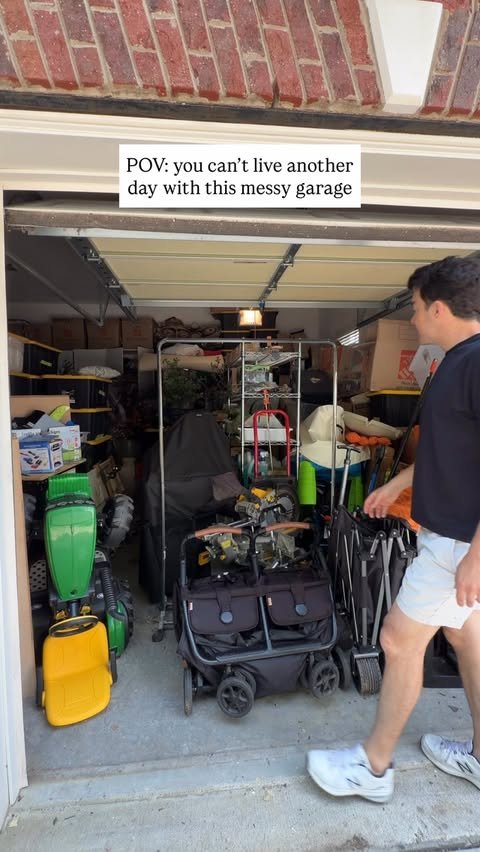
- “POV: your wife couldn’t live another day with this kitchen…”
- “You are NOT READY for this transformation!!!”
- “She trusted me with her hair… until I said THIS!”
These overlays establish a beneficiary, conflict, or looming reveal. They are more functional than generic superlatives because they explain why the process matters.


The Length Playbook
7–12 seconds: one contrast, one transition
This is the strongest structure for makeup, hair color, quick fitness comparisons, and visual glow-ups.
A reliable shape is:
- First third: raw before plus one line of context.
- Transition: beat-synced hard cut or full lens cover.
- Final half: result, movement, and one secondary pose.
Do not spend eight seconds setting up a three-second after. Several strong short beauty examples did the opposite: they reached the reveal by roughly the midpoint and let the result occupy half or more of the runtime.
15–35 seconds: demonstration plus proof
This range suits skincare, cosmetic application, cleaning tips, hair styling, and room resets. It allows a visible application step, half-face comparison, or short process sequence without becoming a tutorial essay.
An Instagram tone-up-cream demonstration uses matched framing, shows one treated side at six seconds, completes the face, poses with the result, and closes on the bottle.

A Redken hair Reel moves from washing through rollers and reaches the bouncy result at twenty-four seconds, then closes with the products.

45–90 seconds: transformation story
This range works when the transformation has a sequence worth understanding: organization, fitness progress, multi-step skin routines, or a meaningful makeover.
A recent Instagram fitness transformation spends its first half establishing the regression and restart, shifts into progress footage, then gives the final beach physique its own closing scene.

A sponsored garage transformation uses the clutter as the opening problem, demonstrates installation and storage use, and ends by proving the space can now hold a car.
90 seconds to three minutes: documentary transformation
Long posts can work when they contain stakes, process variety, and intermediate rewards. Length must buy credibility or emotion; it cannot simply delay the reveal.
The strongest long-form structures included:
- A very early teaser of the completed result.
- Fast process chapters rather than repetitive footage.
- Voiceover that advances the story.
- A final reveal lasting roughly ten seconds or more.
- Reaction, inspection, or a concrete functional test.
A sponsored bedroom cleaning opens on the person being helped, briefly flashes the finished room, documents cleaning and renovation, then returns to matched before/after angles.
A kitchen renovation spends most of its runtime on genuine construction stages, then uses cinematic pans for the final ten seconds.
How to Structure the “After” for Maximum Impact
Reveal the result, then prove it
The after should not be one beauty shot. Use a sequence:
1. Recognition shot: the widest or clearest view of the full change.
2. Inspection shot: texture, roots, skin, storage, corners, or surface finish.
3. Motion shot: hair flip, head turn, room pan, flex, walkthrough, or light reflection.
4. Human payoff: smile, gasp, touch, or direct reaction where appropriate.
5. Product connection: show the product only after viewers understand the result—or keep it naturally present during the process.
A long Instagram salon transformation spends more than a third of its runtime on the mirror reveal, client delight, extension inspection, dancing, and front-and-back glamour views.
Another recent salon Reel similarly includes the live reaction, a close inspection of the extension blend, an updo test, and a final model walk.

Match the before where comparison matters
For skin, teeth, hair growth, fitness, and cleaning claims, repeat the original angle before adding glamour footage. Matched framing lets viewers verify the change; alternate angles then make it feel premium.
For home content, the most convincing finish is often:
- Same wide angle as the before.
- Slow pan across the completed space.
- Two or three detail shots.
- Functional proof, such as opening storage or parking a car.
Let short beauty results occupy the back half
In short-form beauty, the after is the entertainment. Recent strong posts often used roughly half—or more—of their runtime for the finished look. The result should move: turn the face, change expression, catch light on the hair, or bring the treated area closer to the camera.
Let long transformations reserve a real closing chapter
Long home and cleaning videos frequently devote under ten percent of runtime to the final state. That can still work when the process is inherently satisfying, but it is risky for branded UGC because the product’s benefit may become an afterthought.
For a brand edit, retain at least one uninterrupted wide reveal, one detail pass, and one functional demonstration. The recent bathroom refinishing example begins presenting the finished white surface well before the ending and spends more than a third of its runtime inspecting the gloss from multiple positions.

Use reactions selectively
A genuine client reaction adds emotional proof to salon and makeover content. It is less useful when obviously staged or when it replaces a clear look at the result.
The best sequence is result first, reaction second, inspection third. Viewers should never have to infer the transformation solely from someone screaming or smiling.
TikTok Versus Instagram
TikTok
TikTok’s strongest short examples were faster, more audio-dependent, and more willing to use a single visual contradiction as the whole premise. Beat-synced hard cuts, lens-cover reveals, static time-lapses, blunt on-screen objections, and dated progress montages all appeared in strong recent posts.
Long TikToks worked when they behaved like episodic stories: free cleaning, room makeover installments, or salon transformations with dialogue and suspense.


Recent Instagram winners more often connected the transformation to a tutorial, professional service, or branded process. Product application and result footage were commonly kept in the same framing, while salon content leaned heavily on consultation, personality, client reaction, and detailed inspection.
One important distinction: polished Instagram Reels do not always need a traditional before. A completed room tour may attract attention as pure inspiration, but it should not be treated as before/after proof unless the starting state is actually shown.
A Practical Production Blueprint
Beauty, hair, or makeup
- Open on the untreated face or unfinished hair at the same scale as the result.
- Add one specific tension line, objection, or comparison.
- Transition within the opening half.
- Prefer a hard cut on the beat or complete lens cover.
- Hold the result long enough for a head turn, close inspection, and second pose.
- Keep products secondary unless application is the core proof.
Skincare and treatment results
- Use bare-skin close-ups.
- Match lighting, lens distance, and angle.
- Add dates or elapsed-time labels for gradual outcomes.
- Show application or routine only after the starting condition is clear.
- Include one untreated-versus-treated comparison when possible.
- Avoid morphs, beauty filters, or lighting changes that undermine trust.
Fitness
- Match pose or action when possible.
- Use time markers or a visible progression rather than only two unrelated clips.
- Build the edit around effort and consistency, not merely the final flex.
- Give the finished physique a distinct closing scene.
Home and cleaning
- Start with a wide establishing shot of the entire problem.
- Preserve a locked or repeatable comparison angle.
- Compress repetitive labor; retain tactile and irreversible steps.
- Use intermediate mini-reveals during long edits.
- End with a matched wide, detail pans, and functional proof.
- For sponsored work, demonstrate the product solving the problem inside the process rather than interrupting the reveal.
The Bottom Line
The winning transition is not inherently the smoothest one. It is the one that makes the transformation easiest to understand and hardest to dispute. Right now, that usually means a hard cut or lens-cover reveal for short beauty content, matched checkpoints for gradual results, and time-lapse or process montage for home and cleaning.
Brands should treat the after as a sequence rather than a single frame: recognition, inspection, motion, reaction, and product connection. That structure preserves the emotional payoff while supplying the visual evidence viewers need to believe the result.


