How Crypto Companies Are Marketing on TikTok in 2026

> Over the past week, crypto’s strongest social marketing rarely looked like crypto advertising. Brands used trader memes, college humor, sports, street interviews, breaking news and real-world demonstrations to earn attention first. Volatility was handled with self-awareness or factual context, while security, utility and cultural relevance replaced aggressive price promises.
Crypto marketing is becoming entertainment with a financial product underneath
This review covers official and ecosystem content published from October 10–17, 2026. The clearest pattern is de-centering crypto itself: the strongest posts begin with a recognizable cultural format, human problem or mainstream interest, then let the brand sit inside it.
Three distinct jobs emerged:
1. Earn attention through culture: memes, sports, college life and current events.
2. Make crypto tangible: show a payment, card, device or market moving in real time.
3. Build institutional confidence: partnerships, executives, conferences and security messaging.
The brands trying to do all three in one post generally produced slower, corporate explainers. The more native work gave each post one job.
The week’s dominant strategies
1. Crypto brands are behaving like media companies
Polymarket is the clearest example. Its Instagram feed functions more like a fast-moving news publisher than a trading-platform account, covering politics, AI, geopolitics and internet stories. The product becomes relevant because every news event can become a changing probability.
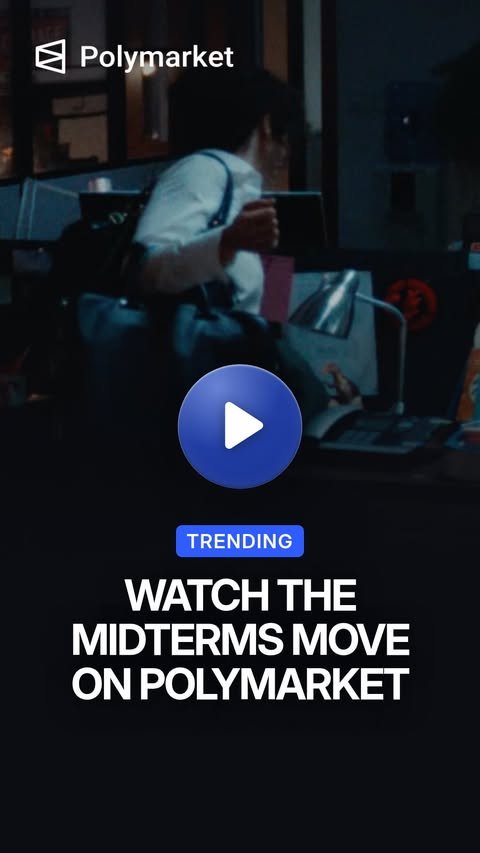
Its most ambitious creative was a fictional political thriller: a staffer discovers a scandal, news headlines accelerate, and an election market plunges inside the story. The product UI is the narrative payoff rather than an interruption.
Polymarket Sports takes an even looser approach on TikTok. One NFL recap opens with “What the fuck did we just watch?”, uses an energetic AI voice, meme inserts and rapid captions, and does not surface a market or product at all. The only conversion ask is to follow the account.

MetaMask is building a similar owned-media lane with a recurring market recap. “It’s 24 hours in crypto. Go!” leads into a quick mix of Bitcoin, Ethereum, inflation, equities and crypto-culture news, with MetaMask charts used as the visual environment.

What this means: instead of asking “How do we promote the app today?”, these brands are asking “What recurring show could our audience expect from us?” That creates an attention asset independent of launches or market direction.
2. Native memes are outperforming literal product explanations
Phantom’s strongest observed TikTok parodies the recognizable Genius lyric-interview format. The creator deadpans: “Shawty told me that she don’t like to trade on Phantom,” then turns the product preference into a repetitive rap punchline.
The interface never appears. Phantom is simply embedded in a joke its target trader recognizes.

Binance uses an even simpler visual pun: “the doctor told me to give the TRADES a rest,” followed by a trader literally putting chart-covered devices to bed. There is no feature list or download prompt.

MoonPay went broader still. Its breakout Instagram post is a college-midterm joke in which a student says he will study at home, gets into bed and fails the exam. MoonPay appears only on his shirt; neither crypto nor the product appears.

The audience response supports the strategy’s cultural fit: comments mostly shared personal study procrastination stories, tagged friends and repeated the joke. People reacted to the situation rather than discussing finance.
That is both the strength and limitation of this model. It produces reach and affinity, but the brand needs retargeting, profile merchandising or adjacent product posts to convert that attention.
3. Mainstream sports are being used as cultural distribution
Sports partnerships appeared across exchanges and payment brands, but the execution ranged from logo placement to participatory activation.
Coinbase × Aston Martin F1 used an artistic infinite-zoom tour of Singapore. Coinbase appeared as a skyline billboard and sponsor badge; there was no product demonstration or CTA. This was pure prestige and cultural association.

Kraken × Williams F1 went further down the funnel. A fan-zone reaction game, leaderboard and potential Bitcoin reward turned sponsorship into an activity. The associated campaign copy connected a small Kraken trade with entry into a driver meet-and-greet.

MoonPay × X Games is closer to an owned sports-media operation. Its Instagram output features athlete clips, team announcements and destination content. In the strongest snowboard clip, MoonPay is absent from the footage itself; the caption and account context carry the partnership.

The distinction matters:
- Coinbase borrows prestige and aesthetic credibility.
- Kraken links fandom to a measurable product action.
- MoonPay builds a repeatable entertainment property with athletes as the content engine.
4. Utility is being demonstrated in ordinary life
Solana translated payments into a street-level business experiment. A creator opens with “Today I’m starting a business on Venice Beach,” sells novelty shirts, accepts only Solana, and shows customers scanning a QR code and completing purchases.
The technology is explained through an outcome—selling physical goods—not architecture or transaction-speed claims.

Solana also used mainstream integration as borrowed credibility. “Samsung just put Solana on 82 million phones” reframes blockchain adoption as invisible infrastructure inside a familiar wallet, supported by executive quotes and transaction data.

Coinbase took a more conceptual route with a street interview asking, “If AI had access to your credit card for one day, what’s it buying?” The conversation contrasts instant AI behavior with delayed banking settlement without directly pitching Coinbase.

These executions share a useful principle: the viewer sees why on-chain infrastructure matters before being asked to care how it works.
5. Hardware and wallets are selling control, not upside
Ledger’s Atom launch is built around physical approval and human agency. A sleek product animation shows a secure element, physical switch and the message “Secure mode activated, you’re in control.”

Its surrounding campaign extends that message to AI agents: software can monitor markets and prepare transactions, but sensitive decisions wait for the owner’s physical approval. This is a well-timed reframing of self-custody from “protect your coins” to “remain the final authority in an automated financial world.”
MetaMask’s current content mix takes another route. Its market recaps keep the wallet useful between transactions, while its polished feature creative demonstrates funding a MetaMask Card through the app. The UI, familiar card form factor and simple action replace abstract wallet messaging.

The hook formats crypto brands are using
Culture-recognition hooks
These assume the viewer already recognizes the template:
- Genius-style lyric parody from Phantom.
- “The doctor told me…” visual pun from Binance.
- College procrastination confession from MoonPay.
- Sports-recap profanity and exaggerated fandom from Polymarket Sports.
They work as entertainment even if the viewer ignores the brand.
Counterfactual questions
Coinbase’s “If AI had access to your credit card for one day…” creates an imaginative scenario before introducing financial infrastructure. This format is especially useful for technical products because respondents—not the brand—surface the problem.
Large-number adoption hooks
Solana’s Samsung opener leads with scale and familiarity, not blockchain terminology. The underlying structure is:
Recognizable company + surprising adoption scale + invisible crypto infrastructure.
Time-boxed news hooks
MetaMask’s “It’s 24 hours in crypto. Go!” promises speed, recurrence and editorial curation. This is more defensible during volatile periods than prediction-led hooks because the brand can remain useful whether prices rise or fall.
Shared-trauma hooks
Crypto.com opens one volatility-themed sketch with “We survived Rektember.” Characters then debate “Uptober” while warning against celebrating too early.

This format acknowledges what the audience has experienced without pretending the brand knows what happens next.
Demonstration hooks without an explicit verbal opener
Ledger, MetaMask and Robinhood Chain all used polished object-first openings: a rotating device, animated wallet interface or branded merchandise. These are visually controlled and premium, but less conversational than the strongest TikTok-native work.

TikTok and Instagram are doing different jobs
TikTok: identity, jokes and conversational formats
TikTok favored short, legible premises:
- Trader pain and insider humor.
- Street interviews.
- Quick market recaps.
- Event hype.
- Comment prompts and “tag a friend” language.
Phantom and Binance feel closest to native TikTok culture. Coinbase uses the platform more experimentally, moving between street interviews, events and major sports sponsorships. MetaMask’s repeatable recap has a strong native format, although its observed reach remains modest.
Instagram: polish, partnerships and editorial distribution
Instagram carried the more cinematic and brand-building work:
- MoonPay’s X Games ecosystem.
- Polymarket’s news publishing and political film.
- Solana’s founder, partner and adoption stories.
- Ledger’s launch assets and executive explanations.
- Robinhood Chain merchandise.
- Crypto.com events and scripted market humor.
Instagram is serving as the brand-world platform: it shows what the company is associated with, who validates it and what kind of future it represents.
What the observed performance says
The highest-resonance examples are not conventional explainers. They are college humor, an F1 art collaboration, a platform-native parody and a compact trader joke.
Polymarket’s cinematic campaign reached widely but generated relatively little interaction. That does not make it ineffective—it may be optimized for awareness or distribution—but it should not be treated as proof that high-production narrative automatically creates community response.
MoonPay’s results show the clearest trade-off. Entertainment with almost no crypto content can travel extremely far, while its developer-oriented PayBox promotion attracted far less visible attention. The funnel therefore depends on connecting those audiences after the entertaining post.
How brands are handling volatility
They are avoiding direct certainty
The strongest official accounts did not lean heavily on “buy the dip” or guaranteed-return language, even though that rhetoric remained common in the surrounding creator ecosystem.
Instead:
- MetaMask summarized market moves and macro context.
- Crypto.com joked about cautious optimism and questioned historical seasonality.
- Phantom placed entertainment and financial-advice disclaimers in its caption.
- Ledger shifted the conversation from price to control and approval.
- Polymarket converted uncertainty itself into the product experience.
Humor is acting as a pressure valve
“Rektember,” “Uptober,” exhausted traders and self-deprecating jokes allow brands to participate in market emotion without issuing a directional forecast. The humor says, “we are experiencing this with you,” rather than “we know what happens next.”
Disclaimers are necessary but do not solve trust problems
Phantom’s parody carried entertainment-only, DYOR and NFA language in its caption. Yet the first-page comment sample was dominated by complaints or skepticism about fees, execution and the trading experience.
That is a warning for wallet and exchange brands: a culturally successful post can open a comment section that becomes a live product-review forum. Community managers need prepared responses and escalation paths, not just legal language.
Creator and partnership models
Owned-channel creators
Brands increasingly use presenters, students, actors and street interviewers without making the post feel like a formal endorsement. The creator supplies a native face and format while the official account retains distribution and control.
Examples include Coinbase’s interviewer, MetaMask’s recap host, Solana’s Venice Beach seller and MoonPay’s college actors.
Institutional partners as creators
Samsung, Ledger, Formula 1 teams and X Games function as credibility and content partners. Their environments give crypto brands stories that would be difficult to manufacture alone.
Athletes as recurring media assets
MoonPay’s X Games strategy is the most developed example: athletes are not merely photographed beside a logo. Their tricks, team affiliations and destinations generate a continuous stream of content.
Few clearly disclosed paid-creator integrations surfaced
In the official current-week sample, the dominant model was not a broad fleet of creators delivering explicit app testimonials. It was owned-channel production, event footage, sports partnerships and ecosystem guests.
That may reflect compliance and trust constraints. For financial products, contextual association is less risky than asking an influencer to make performance claims.
Category-by-category snapshot
Exchanges
Coinbase, Binance, Kraken and OKX are widening beyond “buy and sell crypto.” Their content presents them as cultural, institutional or all-purpose financial brands:
- Coinbase: AI, events and F1 aesthetics.
- Binance: trader memes plus cinematic conference hype.
- Kraken: F1 activations, incentives and promotion-led conversion.
- OKX: executive vision, AI/TradFi convergence and an expanded “money app” position.


Wallets
Phantom prioritizes trader identity and humor. MetaMask is becoming a market-information and everyday-spending interface. Ledger owns the strongest security narrative by connecting self-custody to AI-era human approval.
Chains and protocols
Solana had the clearest content system: adoption proof, real-world payments, partner announcements, founder clips, street questions and conference culture. Many other protocols remained dependent on founder interviews or technical event footage, which is credible but harder to distribute beyond existing crypto audiences.
Prediction markets
Polymarket is escaping the crypto niche by attaching itself to politics, sport, AI and breaking news. The market is not marketed as crypto; it is marketed as a live measure of what the world thinks will happen.
Tokens, memecoins and NFT projects
The broader TikTok ecosystem remained heavy on urgency, P&L screenshots, slang, reaction videos and trader identity. Official brands were more restrained than independent promoters.
NFT-specific official activity was comparatively sparse in the current-week sample. OpenSea emphasized digital art through its flagship-collection programming, but the category did not show the same short-form momentum as sports, payments, prediction markets or memecoin culture. This is an observed visibility gap, not proof that NFT marketing is inactive everywhere.
The tone shift
The week’s content mix points to five tonal changes:
1. From wealth promises to participation. Brands invite people into sports, events, jokes and communities.
2. From crypto exceptionalism to invisible infrastructure. Solana’s strongest argument is that users may not know a transfer runs on Solana.
3. From heroic certainty to self-aware caution. Volatility is acknowledged through humor, recaps and probabilities.
4. From technical authority to cultural fluency. Native formats increasingly carry the brand message.
5. From decentralization slogans to human control. Ledger’s AI-agent framing makes autonomy concrete and current.
What crypto marketers should take from this week
Build an entertainment lane and a proof lane separately. Do not force every meme to explain the product or every feature demo to become comedy.
Turn partnerships into formats, not logo placements. Recurring athlete coverage, fan activations and partner-led proof create more usable content than a sponsorship announcement.
During volatility, report or empathize—do not posture. Market recaps, cautious humor and live probabilities fit the current tone better than deterministic price language.
Show one completed action. A QR payment, physical approval or card-funding flow makes infrastructure understandable without a glossary.
Treat comments as product intelligence. Native humor can attract attention while simultaneously surfacing fee, trust and execution complaints.
Make the brand legible even when the product is absent. MoonPay’s college and sports content proves that crypto companies can reach mainstream audiences, but affinity content needs a clear profile, follow-up sequence and retargeting path to turn entertainment reach into product consideration.
Bottom line
The best crypto social marketing this week did not ask viewers to believe in crypto. It gave them a joke to recognize, a sport to watch, a story to follow or a transaction to understand. The category is moving toward mainstream media behavior—while using security, utility and human control to earn the trust that hype alone can no longer supply.


