What DTC Food and Beverage Brands Are Doing on TikTok in 2026

TL;DR: Over the past week, DTC food and beverage brands shifted away from polished product ads toward entertainment with a product embedded inside it. The strongest work used office pranks, seasonal rituals, creator-hosted occasions, retail field diaries, and tactile product reveals. Founder content remained selective; packaging increasingly became the visual event rather than merely a closing shot.
What DTC food and beverage brands posted this week
This review covers brand-owned and brand-amplified TikTok and Instagram posts published from October 10–17, 2026. The clearest pattern was not one universal format, but a division of labor: TikTok carried the jokes, employees and informal experiments, while Instagram carried more recipes, lifestyle partnerships and polished product storytelling.
Three strategic shifts stood out:
1. Brands are wrapping the product in entertainment. Culture Pop, GOODLES, Magic Spoon and Liquid Death made the premise legible before explaining benefits.
2. Lifestyle positioning is becoming occasion-specific. Instead of generic wellness routines, brands attached themselves to Halloween parties, training days, dinner parties, fall evenings and Costco runs.
3. Packaging is becoming content infrastructure. Graza enlarged it into an installation, Fishwife turned it into an advent calendar, and Hiyo used a montage of creators handling, pouring and reacting to a limited-edition can.
1. Entertainment is doing the selling
Culture Pop: office reality show, not soda commercial
Culture Pop produced the clearest breakout creative system of the week. One post framed a real product-positioning meeting as footage secretly recorded by employees. The founder naturally discussed real juice, the absence of artificial sweeteners and the apple flavor while continuously holding the can—but the viewer entered through workplace intrigue, not a benefit claim.

The follow-up pushed the office dynamic further: employees threw five apple sodas at their goggle-wearing boss and challenged him to identify Culture Pop. The cans stayed offscreen; suspense, coworker laughter and the boss’s escalating discomfort carried the video.

The important shift is that Culture Pop is building recurring characters and workplace lore. Its differentiation points still appear, but inside a format viewers could follow even if they had no interest in functional soda.
Liquid Death: a partnership presented as a comedy sketch
Liquid Death announced its SIXT rental-car activation through a sequence of actors describing “their first time” with sexual double meanings. Only after the setup did the video reveal that each story concerned Liquid Death Energy. The free-can offer then became the punchline and CTA rather than the opening sales message.

This is materially different from putting two logos on a creator post. SIXT supplies the narrative setting—luxury cars, rental counters and “first-time” stories—while Liquid Death supplies the joke and product reveal.
GOODLES and Magic Spoon: employees become the cast
GOODLES turned apple bobbing into “bobbing for cups,” placing brightly colored mac-and-cheese cups in the office water barrel. Coworker failure, splashing and cheering created the entertainment; the packaging functioned as the game equipment.

Magic Spoon used a more repeatable challenge: employees attempted to identify cereal-milk flavors through hidden straws. Boxes remained visible as the possible answers, while team labels, checks and red Xs gave the video a game-show structure.

Magic Spoon also posted an extremely low-production engagement prompt—three differently bitten cereal bars under “Which bite are you?” The contrast shows a useful programming approach: a brand can alternate produced employee episodes with cheap, static participation posts.

2. Taste tests are evolving into reaction compilations
The old taste-test structure—one creator tastes one product and gives a review—was not the most distinctive version this week. Hiyo compressed many creators, homes and reactions into one rapid social-proof montage for its limited-edition apple-cinnamon flavor.
The opening stacked emotional reactions—“OMG?!,” “Chef’s kiss” and “This is insane”—before slowing down enough to show the four-pack, can, pour and flavor name. Creators then translated the taste into culturally legible language such as “fall in a can” and “apple pie.”

This format does three jobs simultaneously:
- It communicates taste through multiple independent reactions.
- It demonstrates several serving rituals, from cans to ice-filled glasses.
- It makes the limited-edition launch appear socially validated rather than brand-declared.
By comparison, simple street or blind taste tests remain common across food TikTok but did not distinguish themselves as strongly in the broader recent content landscape. The fresher opportunity is edited consensus: many fast, specific reactions around one product truth.
3. Seasonal content moved from decoration to behavior
Nearly every active brand referenced fall, Halloween or upcoming holidays, but the better executions made the season change what people did with the product.
Poppi and OLIPOP: the product as an ingredient
Poppi turned Sour Apple into a Halloween caramel-apple drink. The finished drink appeared first, followed by a fast sequence of cream, syrup, frothing, ice, can opening, cold foam and caramel. Product, texture and packaging remained visible throughout.

OLIPOP took the same broad seasonal territory into an adult cocktail occasion. Its Caramel Apple Bourbon Crush opened on the finished drink, then demonstrated the cinnamon-sugar rim, bourbon build, OLIPOP pour, apple garnish and caramel finish.

The two posts illustrate sharper differentiation than “fall vibes.” Poppi occupied playful Halloween indulgence; OLIPOP occupied saveable happy-hour utility.
Recess: sponsor the whole occasion
Recess appeared inside a creator’s first Halloween party rather than in a standalone drink demonstration. Apple Tini cans were poured into eyeball-garnished glasses, stocked in ice tubs, held by guests and woven through costumes, dancing and a contest.

The product gained meaning from the host’s broader sober-party narrative. This is stronger lifestyle positioning than placing a can beside a candle: the creator showed exactly who drinks it, when, with whom and in place of what.
Fishwife: holiday packaging as serialized anticipation
Fishwife teased its advent calendar with a three-second flap opening that revealed “OUR BIGGEST LAUNCH YET... COMING SOON!” A second post showed salmon being packed, tins moving through machinery and the cans entering illustrated calendar compartments.


Together, the posts turn packaging into both a countdown mechanism and a behind-the-scenes story. The calendar can support repeated reveals rather than a single launch announcement.
4. Packaging is becoming the hook itself
Graza offered the most literal example. Its hummus launch opened with a giant inflatable replica of the purple tub in a public park, then moved through armfuls of retail packs, an open product shot and a person posing beside the installation.

The first image communicates novelty before the viewer reads a claim. Distinctive purple-and-green packaging, scale contrast and the skyline do the attention work; Costco availability and the garlic-confit flavor provide the commercial payoff.
Jeni’s took the opposite route: it removed almost all packaging and filled the frame with one continuous scoop of Buttercream Birthday Cake ice cream. The product’s density, sprinkles and cake pieces became the hook.

These executions sit at opposite ends of one useful spectrum:
- Package spectacle: enlarge, animate or structurally transform the container.
- Product intimacy: crop tightly enough that texture becomes the entire visual world.
A conventional can held toward the camera sits weakly between those poles unless a reaction, ritual or story gives it a role.
5. Founder content is present—but “founder talking head” is not the trend
Founder content this week worked when the founder occupied a real situation.
Fly By Jing’s Jing narrated the brand’s first South Austin Costco Roadshow: approaching the booth, sampling noodles, talking with shoppers, taking a snack break and ending with the team. The opening—“COME WITH ME TO A Costco Roadshow”—promised access to an operational milestone rather than a generic entrepreneurship lesson.

Culture Pop’s founder became compelling because viewers were supposedly watching a meeting they were not meant to see. In both cases, the founder was a character inside brand activity, not an executive reciting values against a clean background.
The actionable pattern is event-led founder content:
- First retail roadshow
- Product-development test
- Sampling day
- Packaging or production milestone
- Customer interaction
- An actual internal decision
A founder’s title is not the hook. Access to something normally unseen is.
6. Retail expansion is now a content genre
Costco, Target and Whole Foods appeared repeatedly, but brands framed retail differently.
Fly By Jing: document the activation
The Costco Roadshow post showed the human work behind sampling: the booth, staff, shoppers, carts, product stacks and team energy. Retail became a mini-vlog.
Graza: make the launch visually impossible to miss
The oversized hummus tub transformed a Costco launch into a photo opportunity. The packaging carried the story.
Siete: place retail inside a wider cultural system
Siete promoted Costco cookie availability, but its more distinctive content centered Latino Heritage Month, ACL Fest and a colorful rapid-fire interview with two culinary-community guests. Questions about conchas, pink cake, breakfast tacos and “the secret to life” framed Siete as a participant in culture rather than merely a seller of chips.

Retail content is therefore splitting into three useful lanes: field diary, spectacle and community context. A shelf pan with “now at Costco” is the least developed version.
7. Creator partnerships are moving from endorsement to hosted experience
The strongest partnerships gave creators a real activity to lead.
Chomps: integrate into an existing performance routine
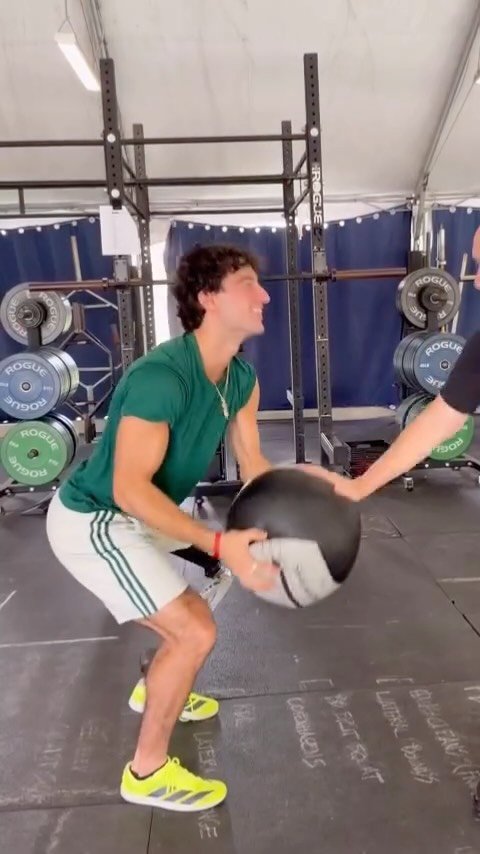
A track athlete documented a full training day, packing Chomps in his bag, eating it mid-workout and holding it again after training. The product appeared at natural energy-transition points rather than being introduced in a separate ad segment.
Banza: fund a social world
Banza partnered on a gluten-free, plant-based dinner party tied to a cookbook launch. Boxes appeared during preparation, but the larger asset was the long table, multiple dishes and guests eating together.

Athletic Brewing: borrow a recognizable personality format
Teoscar Hernández answered playful rapid-fire questions while holding an Athletic can throughout. The product stayed constantly visible, but the content promise was access to the athlete’s personality.

Spindrift and Momofuku: recipe authority
Spindrift partnered on a Mediterranean carrot-and-avocado salad, with Cranberry Punch poured as the pairing and its Non-UPF label deliberately shown. Momofuku products entered a crispy chicken recipe at the hook and again during sauce assembly.


The creator-partnership shift is from “tell your audience you like this” toward “host a situation in which this product has a clear job.” Training, entertaining, cooking and throwing a party all produce more believable integration than isolated praise.
8. Lifestyle positioning is getting narrower and more ownable
Broad wellness language is giving way to specific identities and moments:
- Recess: stylish, alcohol-free social hosting.
- Chomps: portable fuel between training blocks.
- Super Coffee: self-aware endurance athletes who pay to “suffer.”
- Daily Harvest: reducing meal-prep friction during cozy fall evenings.
- MUD/WTR: attention, calm and creative philosophy—even without showing a product.
Super Coffee’s campaign directly addressed runners, cyclists, HYROX competitors and triathletes, then offered travel to an endurance race in exchange for posts showing how participants train and fuel.

MUD/WTR went furthest from conventional product content: a meditative quote about attention appeared over misty stairs, with no package, person or spoken pitch.

That approach can strengthen a brand world, but it asks more of the surrounding feed. Without recognizable recurring codes, product-free philosophy risks becoming interchangeable inspiration.
The hook formats brands used
1. Risk or trouble hooks
Culture Pop used “pls like this so we don’t get in trouble” and the suggestion of secretly recording its founder. These hooks give viewers a role: watching, validating or helping employees get away with something.
This wording family is appearing beyond food content and showed a healthier breakout profile than generic seasonal inspiration in the broader recent TikTok landscape. The mechanism is not simply “be controversial”; it is creating mild social jeopardy that the viewer immediately understands.
2. Double-entendre hooks
Liquid Death opened with “My first time...” and delayed the innocent product explanation. The wording fits the brand because its established voice supports shock and innuendo; copying the phrase without that context would feel forced.
3. Finished-result-first hooks
Poppi, OLIPOP, Spindrift and Momofuku showed the finished drink or dish before the process. This establishes the reward before asking viewers to watch preparation.
4. Access hooks
“COME WITH ME TO A Costco Roadshow” made Fly By Jing’s operational milestone feel like privileged access. Jeni’s similarly opened its test-kitchen story by saying one seasonal flavor took five years to make.

5. Challenge questions
“Can our employees identify the cereal milk flavor?” and “Which bite are you?” made the participation mechanic explicit immediately. These formats also allow the product lineup to remain visible without stopping for explanation.
6. POV and invitation hooks
Banza’s “POV: you’re invited to a gluten free plant-based pasta dinner party” positioned the viewer as a guest. Recess’s “my first halloween party” offered a similarly personal event narrative.
7. Reaction-first hooks
Hiyo opened on “OMG?!” and other strong reactions before explaining the flavor. This works best when the subsequent montage contains varied, specific descriptions—not merely repeated praise.
TikTok versus Instagram: the platform split
TikTok favored mess, characters and recurring bits
The most native TikTok work included:
- Culture Pop’s founder and boss pranks
- GOODLES employees bobbing for product cups
- Magic Spoon’s employee challenge
- Graza’s photo-carousel spectacle
- Jeni’s tightly cropped sensory scoop
- Short, conversational captions that withheld explanation
These posts often looked like something the social team could repeat next week with the same cast or mechanic.
Instagram favored utility, aspiration and collaboration
Instagram carried more:
- Fully demonstrated recipes
- Creator-hosted parties and dinners
- Athlete lifestyle integrations
- Brand collaborations and giveaways
- Longer event recaps
- Product-development stories
Poppi was a notable cross-platform example: the same Halloween recipe received much broader distribution on Instagram than the surrounding TikTok feed, while Culture Pop’s workplace entertainment was especially native to TikTok.
The takeaway is not to produce entirely separate campaigns. It is to edit the same strategic idea for a different viewing contract: TikTok asks “what happens next?”; Instagram more often asks “is this useful, desirable or worth saving?”
Brand-by-brand snapshot
Liquid Death
Large-scale comedy, brand partnership and a promotional offer hidden inside a narrative reveal.
OLIPOP
Short meme-like TikToks plus polished seasonal drink recipes on Instagram; also participated in a Momofuku giveaway.
Poppi
Seasonal recipe content and personality-led entertainment, with stronger emphasis on polished drink construction.
Magic Spoon
Employee challenges, simple visual polls and cereal-centered entertainment rather than nutrition lectures.
Athletic Brewing
Athlete personality access, with the can functioning as persistent visual sponsorship.
Recess
Minimal, aesthetic brand posts supplemented by a much richer sober Halloween-party partnership.
GOODLES
Office humor, seasonal games, recipes and community-program promotion.
Graza
A packaging-led hummus launch supported by an oversized physical installation and Costco availability.
Fly By Jing
Founder field diary, Costco sampling and creator-led retail discovery alongside fall recipes.
Momofuku Goods
Creator recipes, comment-driven recipe distribution and a cross-brand OLIPOP giveaway.
Fishwife
Holiday-launch suspense, tactile advent-calendar packaging and behind-the-scenes production.
Chomps
Performance-lifestyle integration and parent-oriented portability content.
Banza
Social cooking occasions, creator recipes and teaser-style pairing content.
Siete Foods
Cultural storytelling, community interviews, festival activation and retail availability.
Daily Harvest
Cozy-season lifestyle positioning, seasonal bundles and creator-led convenience messaging.
MUD/WTR
Brand philosophy and mindfulness rather than direct product demonstration.
Super Coffee
An endurance-community UGC challenge built around race travel.
Health-Ade
Seasonal flavor return, giveaway mechanics and casual grocery humor.
Culture Pop
The clearest recurring entertainment franchise: founder meetings, boss pranks and employee-led office lore.
Spindrift
Recipe partnerships, food pairing and Non-UPF messaging.
Hiyo
Limited-edition taste-test compilation, festival association and Target-centered seasonal occasions.
Jeni’s
Texture-first product footage, menu hacks and unusually detailed test-kitchen storytelling.
Partake Foods
Halloween baking utility using its grahams as a recipe component.
No clearly current brand-owned posts were confirmed in the seven-day window for several searched accounts, including De La Calle, Ghia, Chamberlain Coffee, Cann and Omsom; some also had ambiguous or inactive TikTok identities. That absence should not be read as proof that the brands ran no creator seeding or paid activity elsewhere.
What this means for DTC F&B marketers
Build a repeatable entertainment property, not isolated “fun” posts
Culture Pop’s office cast, GOODLES’ employee games and Magic Spoon’s challenges can all recur with new prompts. The repeatability matters more than any single joke.
Give packaging a verb
Do not merely display it. Open it, enlarge it, hide something inside it, float it in a game, run it through a factory or make it the answer to a challenge.
Replace generic lifestyle with a specific occasion
“Part of your routine” is weaker than “mid-workout refuel,” “first sober Halloween party,” “plant-based dinner party” or “Friday happy hour.” Specific occasions clarify the product’s social job.
Use founders where access is real
Retail trips, sampling events, product tests and difficult decisions are stronger than generalized founder advice. Let the founder narrate something happening now.
Treat creator partnerships as production formats
The creator should host, train, cook, entertain, test or document—not simply hold the product and endorse it. The activity supplies authenticity and gives the brand something reusable beyond a testimonial.
Match seasonal content to product behavior
A seasonal color palette alone is easy to ignore. The better posts changed the recipe, serving ritual, package, event or game because it was Halloween or fall.
The bottom line
The current DTC F&B feed is becoming less like a catalog and more like a set of small media franchises. The brands creating the clearest distinction are not abandoning product proof; they are embedding it inside entertainment, occasions and tactile demonstrations. The winning strategic question is no longer only “How do we show the product?” It is “What recurring behavior does this product let us film?”


