What Top Fitness Brands Are Doing on TikTok in 2026

Top fitness brands spent the week turning products into culture: celebrity-led campaign worlds, race-day communities, coach-led education, and gym-native humor beat straightforward selling. Gymshark owned the strongest rollout, WHOOP and recovery brands leaned into proof, while apparel brands increasingly sold fashion and belonging. The clearest emerging opportunity is short, text-led gym comedy.
What fitness brands posted this week
This review covers official and partner content published October 10–17, 2026 across TikTok and Instagram. The clearest pattern was a move away from isolated product posts toward repeatable content worlds: one partnership, race, challenge, community, or cultural moment generating several different posts.
The brands separated into five strategic lanes:
1. Apparel as entertainment and fashion culture — Gymshark, lululemon, On, Vuori, Alo and Athleta.
2. Performance proof — WHOOP, Hyperice and Therabody.
3. Community identity — HOKA, Orangetheory, Alo, Peloton and ClassPass.
4. Gym-native humor — Planet Fitness, Crunch, Anytime Fitness and Strava.
5. Useful coaching and competition preparation — Centr, F45, Orangetheory, Strava and Tonal.
The strongest strategy: build a campaign sequence, not one hero post
Gymshark produced the week’s most complete social rollout. It teased a mystery through a branded locker and date, revealed Megan Thee Stallion as an athlete, followed with candid behind-the-scenes footage, then moved into a separate winter-discipline story led by Sam Sulek.
Teaser
A face-hidden locker mystery creates curiosity before naming the talent.

Reveal
Megan becomes the entertainment; apparel stays continuously visible inside the action.

Follow-up
Candid dialogue and production footage extend the campaign through personality.

Evergreen lane
Sam Sulek carries a darker, introspective story about winter discipline.

The sequence works because each asset has a different job: curiosity, announcement, intimacy, then brand philosophy. The reveal drew unusually strong interaction, while comments focused on Megan, the cultural timing and renewed motivation to train—not simply the clothes.
Gymshark also used the same behind-the-scenes creative on TikTok and Instagram without observable changes. Peloton did the same with its Tread Flex demonstration. That confirms efficient cross-posting, but the large platform-level performance differences mean identical distribution should not be mistaken for identical audience behavior.
Apparel brands are becoming fashion and culture publishers
Lululemon: collaboration as participation
Lululemon’s GANNI rollout did not begin with fabric technology. A steamy, red-lit “Come on, let’s dance” invitation established a playful world, followed by a studio performance where the collaboration was visible in motion.


The smart part is the shift from “shop this collaboration” to join this occasion. One post invited New Yorkers to comment for access to Club Dance, turning launch engagement into an event mechanic.
On: celebrity chemistry over polished endorsement
On’s strongest content paired Zendaya and Law Roach inside its Paris flagship. Rather than delivering campaign lines, they browsed, joked, discussed details and modeled the collection like collaborators enjoying their own work.

A second video used a stylized disagreement between Law Roach and Angélique as a retail comedy sketch. Its comments overwhelmingly reacted to the humor and character chemistry.

The transferable lesson is not merely “use celebrities.” Give recognizable talent a relationship and a scene to play. Product becomes more watchable when it participates in the interaction.
Vuori and Athleta: activewear without the workout
Vuori treated performance apparel as a travel capsule. Its visual lookbook used neutral styling, full-body outfit changes and a clean studio rather than gym footage.

Athleta similarly emphasized everyday styling, texture and outfit versatility. This widened the use case from exercise to daily life, though its TikTok interaction was weak relative to the volume of product-led posts observed.

This is a warning for apparel marketers: polished outfit content is common and culturally relevant, but it is not automatically distinctive. The broader activewear-style cohort performed around the general fitness baseline; styling needs either a strong personality, social premise or recognizable collaboration.
Alo: community as luxury atmosphere
Alo’s Berlin yoga recap used candles, slow pacing and sound-bath audio rather than an explanatory hook. The event sold the feeling of being inside the Alo community.

Alo’s approach is less about immediate conversion and more about making the brand’s offline world feel exclusive, restorative and globally portable.
Wearables and recovery brands are splitting into proof and identity
WHOOP used localization at two levels
WHOOP paired a cinematic Arabic campaign—showing the band across culturally grounded routines—with a short Cristiano Ronaldo announcement delivered in Arabic.


The short Ronaldo post became the week’s broadest official-brand hit in the sample. It contains no data demonstration; its value is recognition, language and instant clarity.
WHOOP’s second lane was evidence. A podcast excerpt opened with the blunt claim that alcohol is not good for you, then connected drinks to changes in resting heart rate and HRV before directing viewers to the full podcast.

Together, these show a useful two-tier model: celebrity localization earns attention; expert data earns authority.
Hyperice made the product the lesson
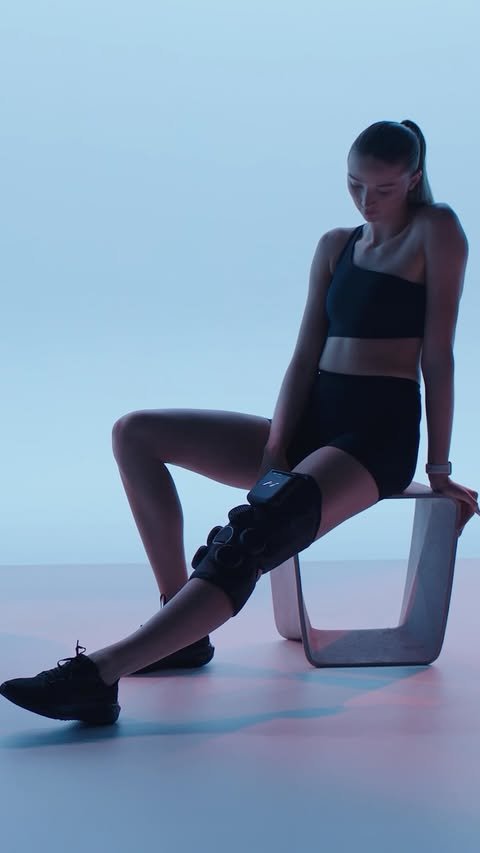
Hyperice opened with “When to use hot and when to use cold,” then visually demonstrated heat, cold and contrast modes on the knee and shoulder. The post taught a decision rule rather than listing features.
Therabody put science inside an athlete test
Therabody placed Josh Allen in a lab with a specialist demonstrating palm cooling. The athlete’s natural question—how the device becomes cold so quickly—made the technical explanation feel less like an ad.

This is stronger than a generic endorsement because the athlete acts as the audience’s proxy: handling the device, asking questions and reacting to a measurable claim.
Oura sold universality, while creators exposed a trust gap
Oura’s official post used different hands, ring finishes and languages to express “Wear your best life.” It was a polished identity campaign rather than a data story.

Outside the official account, however, a creator’s warning that guitar playing distorted her husband’s activity data generated substantial attention. The contrast matters: wearable brands need aspirational identity content, but creator-led edge cases can quickly become the more compelling conversation.

WHOOP faced a more balanced creator conversation: one reviewer used a full year of personal experience to discuss cost, sensor reliability, recovery scores and when a cheaper tracker might be a better starting point.

Gym chains are winning by behaving like gym members
The gym-chain content with the clearest cultural fit was not facility footage. It was humor, member language and recognizable social situations.
Planet Fitness: values delivered as a native joke
Planet Fitness used a single stair-machine POV with the text hook “imagine minding your own business and not commenting on what someone else is wearing.” It delivered the judgment-free positioning without a corporate explanation.

The comments also reveal the risk: viewers challenged the brand’s dress-code history and accused it of inconsistency. Values-led humor works only when the operating experience can withstand scrutiny.
Crunch: simple observational comedy
Crunch staged an awkward cable-machine attachment swap and let the confused reaction carry the joke. Product, offer and CTA were absent; the gym itself was the setting.

This format aligns with the strongest broader fitness signal found this week:
Across repeated comparisons, gym humor was the only format with a clearly meaningful advantage over ordinary workout and branded-lifestyle content. That does not prove humor caused every result, but the consistency, cohort size and separation from baseline make it the most actionable emerging format.
Orangetheory: community stories plus actual coaching
Orangetheory alternated between emotional membership content and educational coaching. “A love letter to Orangetheory” followed a member’s relationship with the studio through growth, grief and consistency; comments mirrored that sense of belonging.

A separate post answered a real question about base pace, showing how intervals alter the appropriate target. This transforms proprietary workout terminology into useful content.

Barry’s and F45: programs become stories
Barry’s tied Diplo’s Run Club to themed classes and ticket opportunities, turning a partnership into both an event recap and a local acquisition mechanic.

Its Red Standard challenge compressed four workout modes into a fast visual choice: one standard, multiple paths, “You decide.”

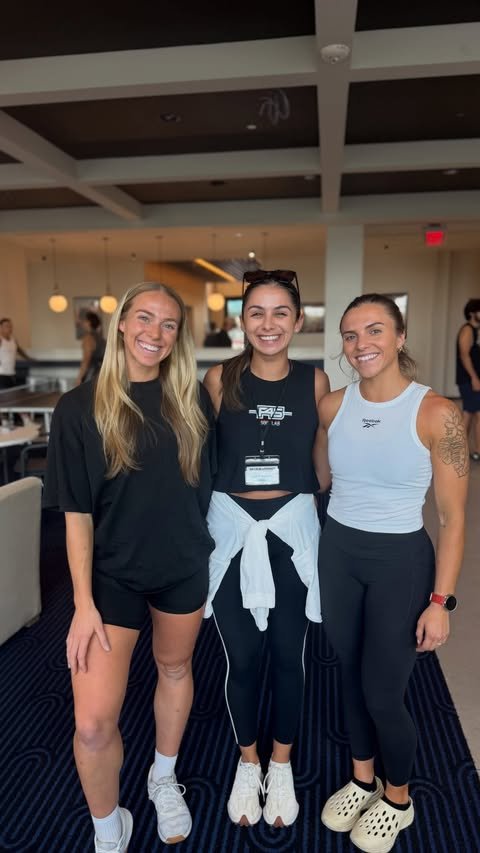
F45 showed the machinery behind its exercise library through a creator-led day at headquarters. The content made centralized programming feel human and gave members access to a normally invisible process.
Running and hybrid fitness are the week’s dominant contexts
Chicago Marathon, upcoming New York preparation and HYROX supplied ready-made stakes across footwear, recovery, apps and equipment.
HOKA built a partner story around two ambassadors pursuing one Chicago goal. The emotional center was pacing, friendship and mutual respect—not shoe specifications. Audience comments repeatedly celebrated the duo and teamwork.

Strava used a creator’s first-marathon lesson—prioritize strength training—to show how the app tracks both running and gym work.

Centr saturated its feed with HYROX: athlete journeys, station technique, beginner running sessions, race equipment and collectible kettlebells. Its strongest educational execution opened by promising tips for all eight stations, demonstrated alignment errors, then moved viewers to a longer YouTube episode.

A former NFL athlete also framed Centr equipment through his transition into hybrid racing, naturally demonstrating the rower, SkiErg and wall-ball setup while explaining his competitive goal.

Marathon and HYROX content were highly visible but performed near the broader fitness baseline as format families. They are valuable contexts, not automatic hooks. The posts that stand out add a concrete human stake: a personal record, first race, training mistake, partner relationship or specific station problem.
Fitness apps are becoming companions, not dashboards
Peloton personified its new Tread Flex as “that girl” and demonstrated incline, screen rotation, class access and folding through one presenter-led sequence.

Apple Fitness+ used Niecy Nash-Betts’ personal comedy story to make walking content feel like entertainment rather than instruction.

Strava mixed race humor, spectator culture and creator partnerships rather than relying solely on app screens. ClassPass emphasized community events, but an important countercurrent was developing outside its account: studio owners and instructors posted detailed criticisms of payout structures, transparency and platform economics.


For marketplace apps, creator partnerships should therefore include supply-side credibility—not only enthusiastic consumers. Otherwise, brand-led celebration can sit beside a more detailed and persuasive critical narrative.
The hook formats fitness marketers should watch
1. A blunt, culturally fluent statement
Examples this week included “The new Tread Flex is that girl,” “Whether people like it or not, alcohol just is not very good for you,” and Gymshark’s winter reflection about training in the dark. These start with a position, not background.
2. One regret or lesson
“If I could go back and train for my first marathon and change one thing…” creates a knowledge gap and gives the product a natural supporting role.
3. A direct question from the audience
“What should true base pace actually look like?” lets the coach answer a narrow, credible problem instead of delivering generic advice.
4. A decision rule
“When to use hot and when to use cold” promises immediate utility. Recovery and equipment brands should frame features around choices users already struggle to make.
5. An insider invitation
“Come on, let’s dance,” a hidden campaign date, or “behind the scenes with the Hot Girl Coach” offers access to a world rather than announcing a product.
6. A familiar gym situation
Text-led observational jokes require little production but currently show the clearest breakout advantage. The key is specificity: an attachment swap, an unspoken gym rule or the awkward behavior members instantly recognize.
Creator partnerships: four models emerged
Celebrity as cultural accelerant
Gymshark with Megan Thee Stallion, WHOOP with Cristiano Ronaldo and On with Zendaya and Law Roach used talent to create news and character—not merely borrowed reach.
Athlete as proof mechanism
Therabody’s Josh Allen test, HOKA’s marathon pairing and Centr’s hybrid athlete let performance goals validate the product.
Instructor as trusted translator
Orangetheory coaches, Centr’s HYROX expert and F45 athletes converted training complexity into useful guidance.
Member or creator as community witness
Alo’s practitioners, Orangetheory’s long-term member and Strava’s marathon creator made belonging and lived experience the message.
The weak version of partnership is “creator wears product during routine.” The stronger version gives the person a defined narrative role: reveal, test, teach, pursue, host or testify.
TikTok versus Instagram
Instagram carried the largest observed reach for many polished brand assets, including On’s celebrity-fashion content, WHOOP’s Ronaldo announcement and the Gymshark campaign follow-ups. TikTok was more responsive to Gymshark’s Megan reveal and Sam Sulek’s creator-native motivational post.
Several brands simply reused identical creative across platforms. That is operationally efficient, but it leaves an opportunity:
- TikTok: open faster with dialogue, tension, a POV or recognizable joke.
- Instagram: retain the polished campaign film, event recap and collaboration world-building.
- Both: preserve the same campaign idea while changing the first seconds, caption and CTA around platform behavior.
This is a strategic implication rather than a controlled causal finding; account size, distribution and platform audience differ substantially.
What is emerging—and what is merely prevalent
Emerging with the strongest supporting signal: short, text-led gym humor; capability-led women’s strength content; creator-hosted explanations built around one precise question.
Highly prevalent but not clearly outperforming baseline: winter discipline, marathon preparation, HYROX training, mental-health movement content, run-club recaps and polished activewear styling.
That distinction matters. A trend can be everywhere without being a performance advantage. The best opportunity is to combine the prevalent context with the stronger format—for example, a HYROX-specific gym joke, a marathon mistake hook, or a women’s strength story built around an observable capability milestone.
The playbook fitness marketers can take from this week
1. Plan partnerships as sequences. Build teaser, reveal, personality, proof and community follow-up assets before launch.
2. Give talent a job. Ask them to test, teach, host, pursue a goal or play a character—not merely wear the product.
3. Use events as content engines. Capture preparation, participant POVs, coaching, humor, recap and post-event reflection.
4. Turn features into decisions. “When should I use this?” is stronger than “Here are its capabilities.”
5. Build recurring gym-native comedy. The format has the clearest current advantage, especially when the scenario is instantly recognizable.
6. Pair aspiration with proof. Identity films establish desire; expert demonstrations and long-term creator experiences answer skepticism.
7. Treat comments as a brand-consistency check. Planet Fitness’s response shows that values content can reactivate unresolved criticism.
8. Adapt openings by platform. Cross-posting is efficient, but the first three seconds should reflect how each audience discovers content.
9. Use race and challenge culture as stakes, not decoration. Name the goal, difficulty, teammate or measurable outcome.
10. Watch the conversation outside official accounts. Wearable accuracy and marketplace economics can become more persuasive narratives than brand campaigns themselves.


